Quiz: Which changemaker are you?
There isn’t one way to change the world. There are all different kinds of people who use their unique skills and mindset to make a difference. Available in Dutch and English.

Reflections on co-designing new public digital landscapes with care communities
We are currently working on a project in the informal care sector. Together with a network of patient organisations in the Netherlands (Stichting Bovenjan) and Martijn de Waal from the University of Applied Sciences Amsterdam, we are researching how digital spaces can better serve those seeking mental health care, addressing the recurring struggles faced in finding care and support. Beyond this project goal, we are driven by a broader question: how do we design digital platforms guided by public values rather than commercial interests?
In order to design for these communities, we need to design with them. Their lived experiences within existing care systems are not just valuable input but the starting point for designing alternatives in the first place. The people that take part in these systems every day carry knowledge that no researcher or designer can replicate from the outside.
But how do you design a process that honours that? How do you invite people to share vulnerable experiences, and then ask them to leap from what is currently missing or broken towards what is desirable looking into the future? Here is how we approached it.
Together with Vereniging Bovenjan, we brought together members of patient organisations Stichting Borderline, Kiem, Ypsilon and Plusminus. We were lucky to work alongside community members who showed up with openness, honesty, and a genuine investment in making things better.
When working with new people together, we always begin by setting the intention for the day, explain why we are here together and what we are working towards. It helps in managing the expectations and ensures that everyone understands why we are doing what we are doing. We take time to introduce ourselves to each other, what our background is and what our reasons are for showing up before diving into the co-designing activities.
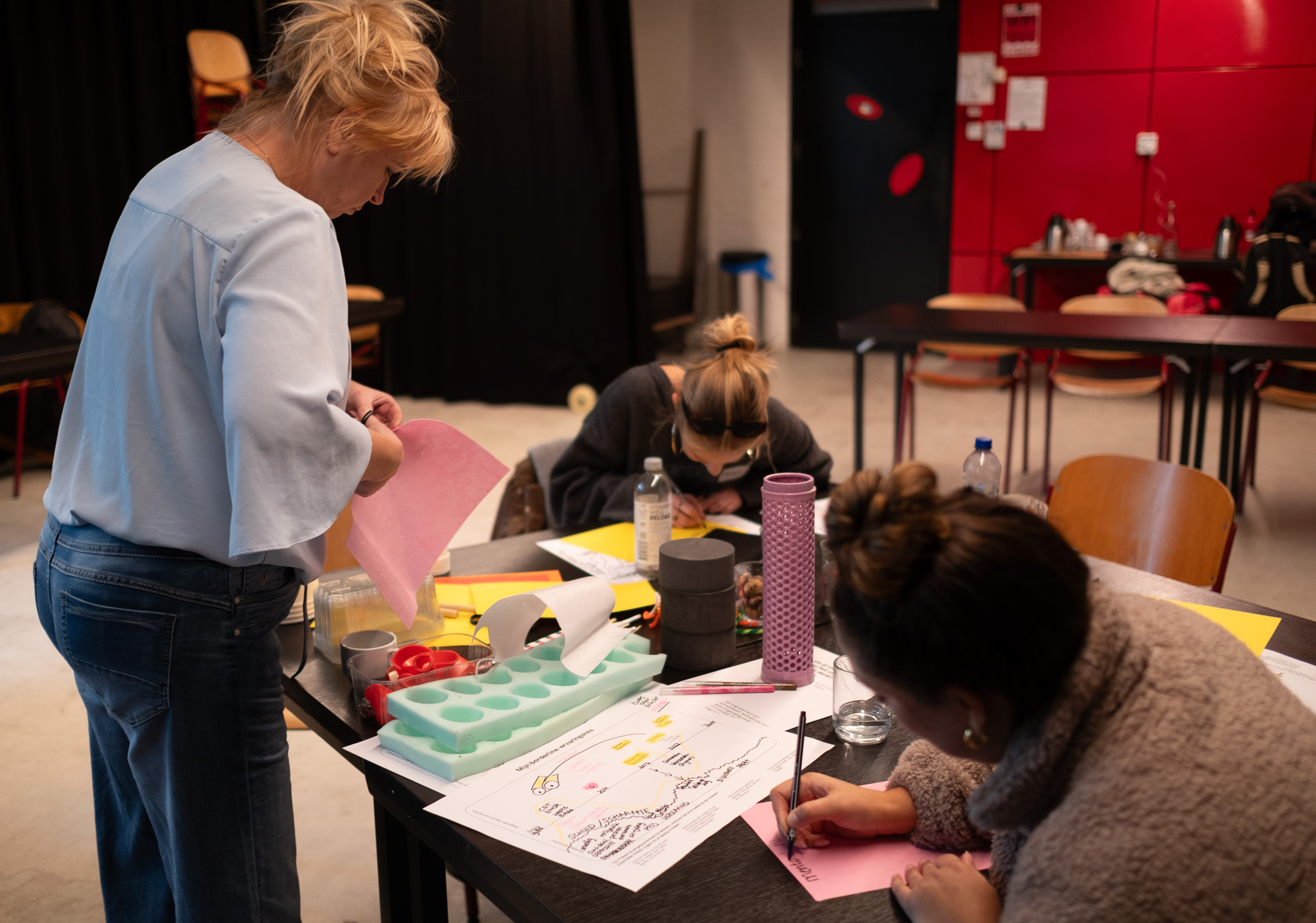
As a first exercise, we asked participants to reflect on the significant moments in their mental health and care journey including the turning points that changed something in their lives for the better or worse. We paired sharing this journey map with active listening, where the listener's only role is to ask questions that deepen understanding, not to respond or advise. It is a small but powerful exercise, since it makes people feel truly heard, and trust follows more naturally.
After this exercise, a participant asked for a break before we continued. It was a good reminder of how important it is to pause, check in, and read the room, especially when working with sensitive topics. I learned that pausing to check in with participants, acknowledging that this kind of work is demanding and giving enough time to rest, helps ensure these exercises remain valuable and trust-building, rather than potentially harmful.
Something I've learned about facilitating workshops so far is how well it works to first give people time and space to think on their own before opening up the brainstorm and discussion collectively. When people are given some time to tune in and sit with their own thoughts they arrive at the table with unique stories and specific ideas. The discussion ends up richer for it, with a wider range of perspectives and experiences to build further upon.
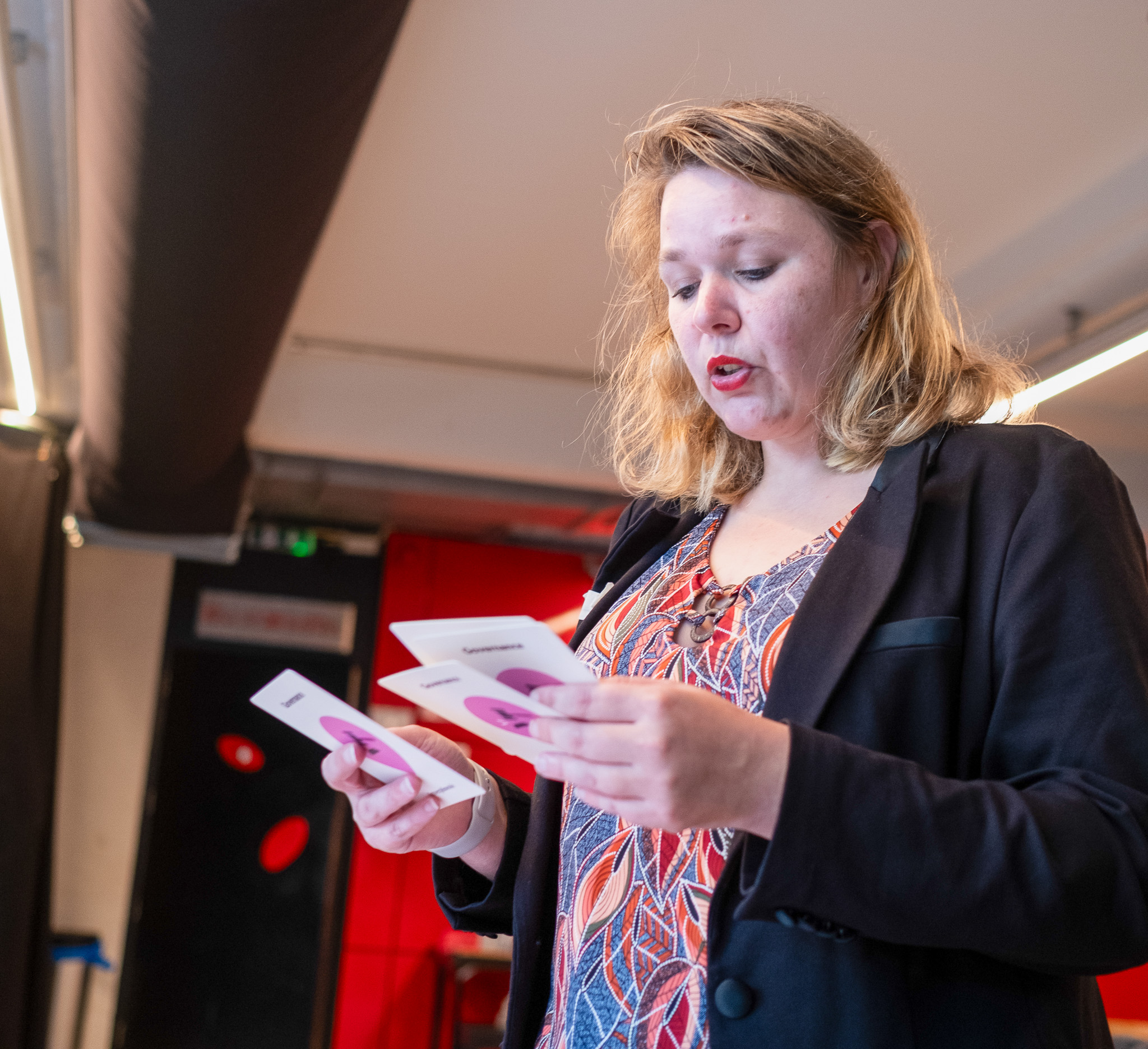
In this series of workshops, we asked participants to revisit their earlier made journey maps, questioning: what has been missing at difficult moments, and what has helped them move forward. From those reflections, we asked them to craft a vision (see images) on what digital infrastructure and services actually need to look like to feel useful to them? Each person then shared their vision with the group, and together they explored where their needs and vision aligned, and where they diverged.
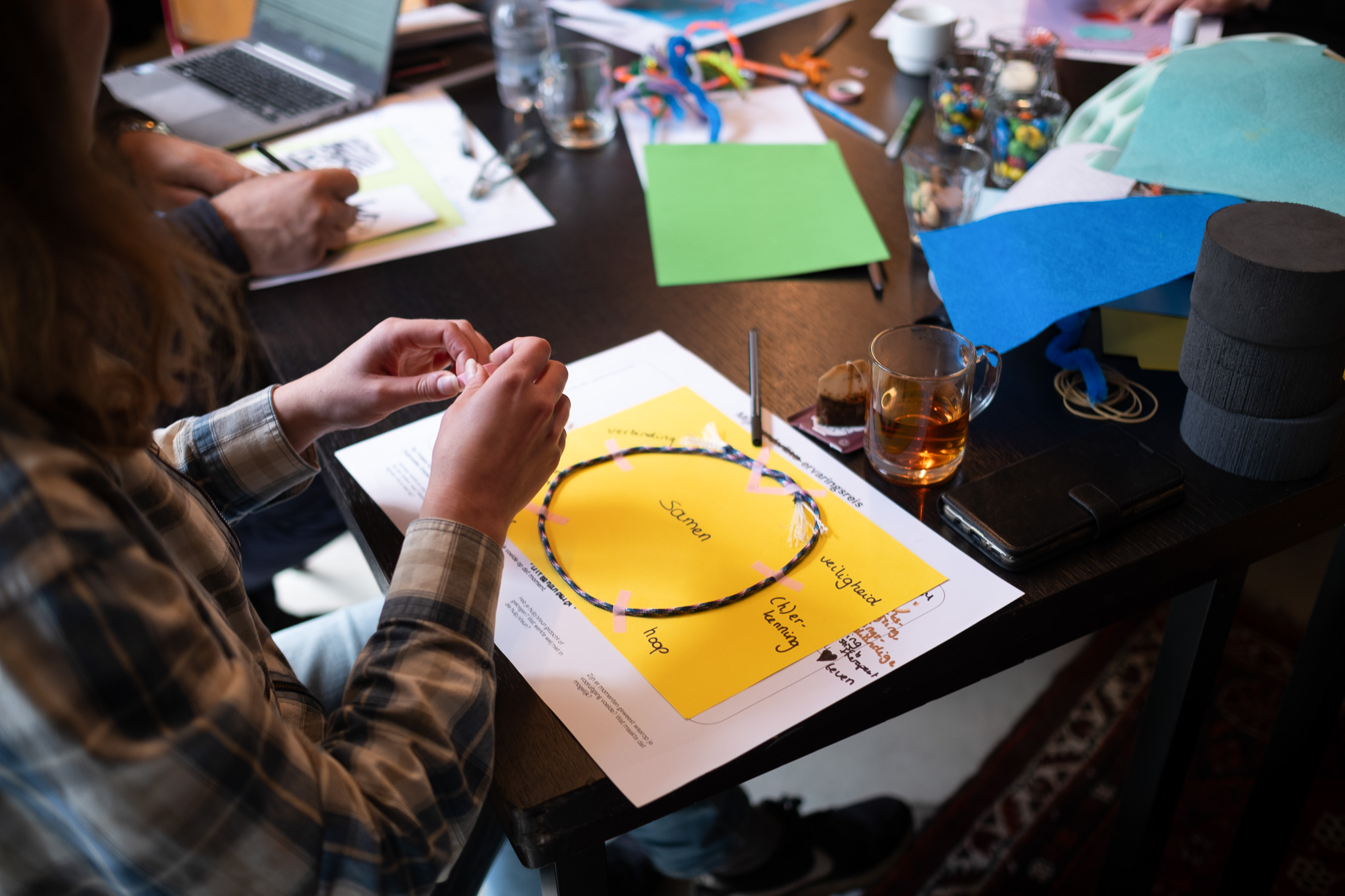
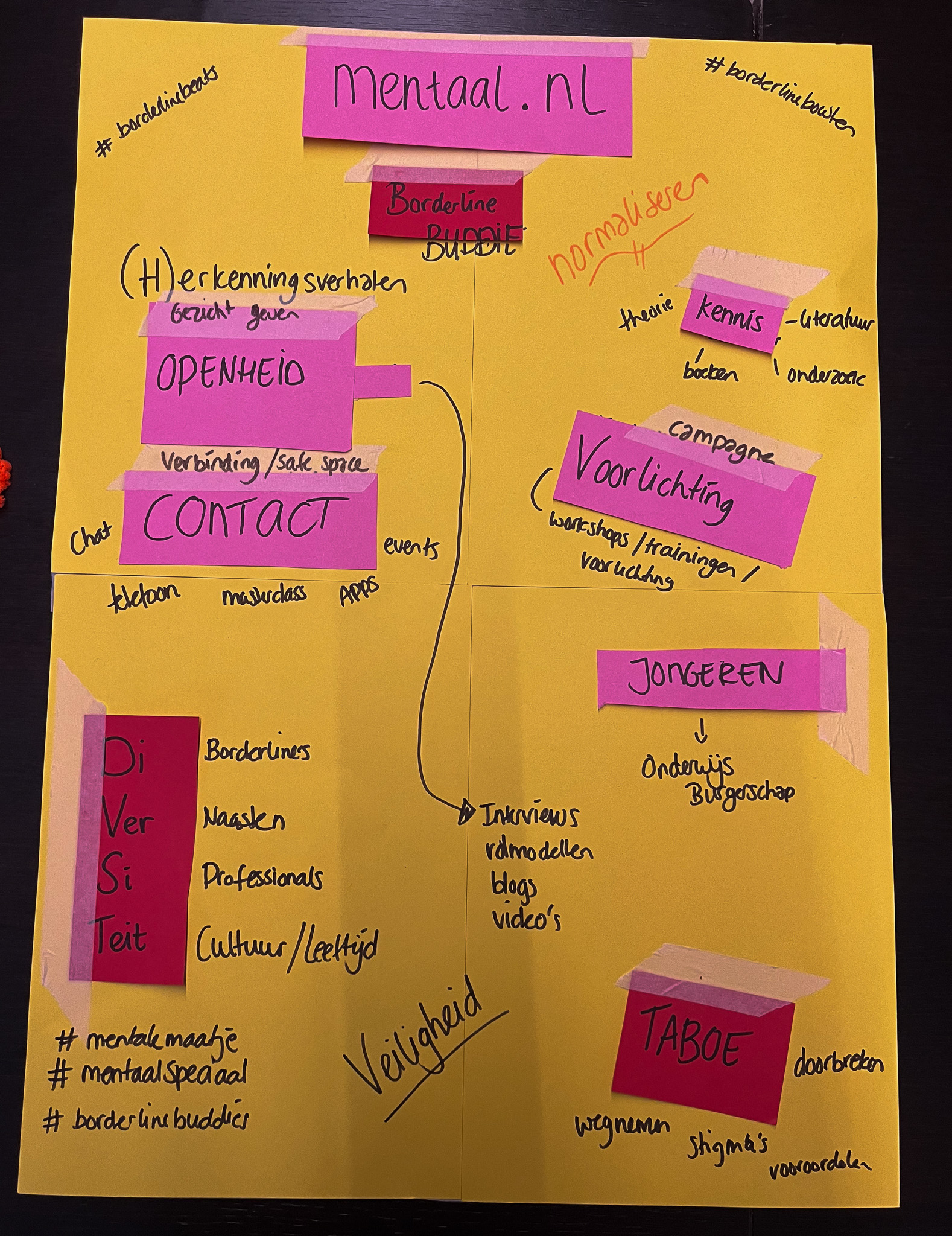
After discussing the individual visions, it was time to make things tangible and explicit within the context of digital infrastructure. Since parts of our lives take place online, using digital services to fulfill our needs, we move and behave in a digital landscape as well. Just as cities are built to serve both the individual and the collective - with roads that take you somewhere, parks where strangers share space, and utilities that keep life running - digital infrastructure shapes not just what we can do online, but how we move, connect, and behave. It is worth asking the same questions of our digital environments that we ask of our cities: who is it built for, who maintains it, and whose needs does it actually serve?
"It is worth asking the same questions of our digital environments that we ask of our cities: who is it built for, who maintains it, and whose needs does it actually serve?"
Building on this city analogy, we asked participants to draw parallels between the services of a city as they know it and how they might reimagine those facilities in an online world, serving their needs and embodying the visions they had come up with.
At the end of the session, the city architects and urban planners gave us a tour into their imagined (online) world. The cities had signposts giving an overview of what there is to experience and how to get there, so you can decide for yourself which direction to take. There was a separate room for family members and loved ones to come together and speak openly, to ventilate without fear of hurting the person they care for. A library held books validated by professionals, but alongside those, the personal stories of people with lived experience. The toilet served as a place to dump your frustrations without being banned from the platform instantly. On the football pitch, people gather weekly to check in with each other; if someone hasn't shown up for a while, it might be time to reach out personally. These are just some of the insights that emerged and together, they start to make a vision for a desirable, more inclusive online world feel within reach.
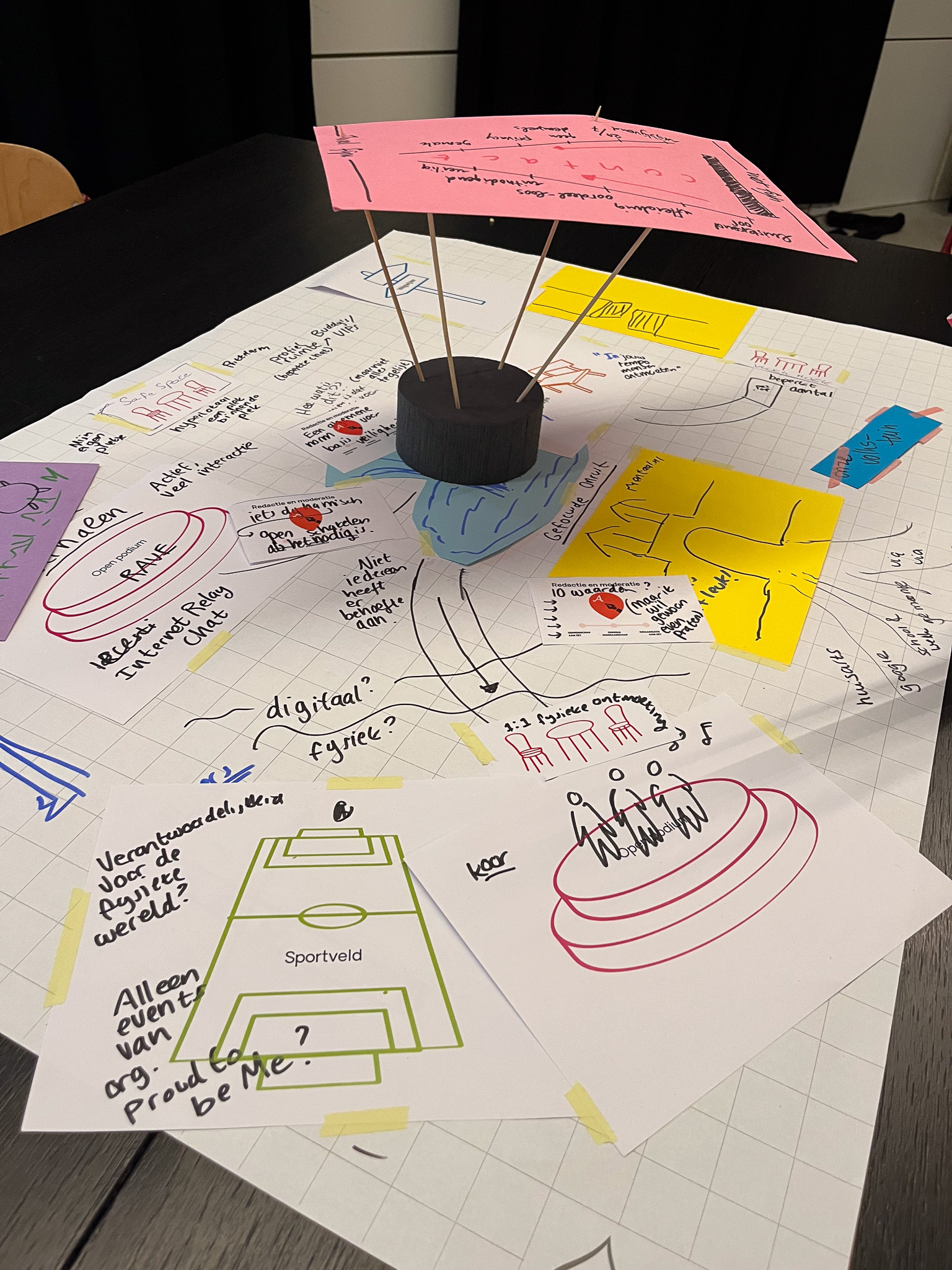
Through this process, we gained a much richer understanding of what these communities actually need from a digital environment and how that could look. By moving from individual envisioning to collective building, and by finding the right metaphor to make abstract needs tangible, we found that different personal needs can coexist in a shared landscape, connected through the right bridges and easy to navigate by signposts and guidelines. That only worked because the people who live these experiences every day were the ones doing the designing.
Through this co-creation, ideas became tangible, and importantly, it became clear that not all needs are aligned. Rather than a problem, this tension is valuable and reveals where the real design challenges lie.
In the coming months, we will build on these insights through a follow-up series of workshops that go deeper into which direction to take, where to intervene, and what that requires from whom, working towards a collective vision and a concrete plan for digital infrastructure that is designed for and by these communities of care. Building something like this takes time, energy, and deep collaboration. We will keep you updated as the process unfolds.

There isn’t one way to change the world. There are all different kinds of people who use their unique skills and mindset to make a difference. Available in Dutch and English.
Earthlings is an interdisciplinary project platform seeding new forms of public participation that better equip society to respond to the systemic impacts of the climate crisis.
Announcing our pilot project with the Fitzwilliam Museum

Three things we learned taking the Food Compass of Change to high school students
.jpeg)
We were featured on the sixth episode of the podcast Feeling Futures.
Bodemkracht: A week of feeling through food systems on a farm in Zeeland